Industrial bread refers to products that are produced in factory production lines, with minimal manual intervention and maximum use of modern machinery, in high volume and with specific hygiene standards. The secret to the success of these products is in preparing a dough that is both stable in quality and texture and capable of mass production without loss of quality.
2. The importance of dough in industrial bread production
Dough is the heart of bread production. In the industrial process, dough stability plays a key role because:
- Ensuring consistent quality in every production shift
- Reducing waste and preserving nutritional value
- Increase product shelf life and prevent premature spoilage
3. Selection of raw materials
High-quality and controlled raw materials are the first condition for producing sustainable dough:
- Strong flour High protein (for bulky and fancy breads)
- Semi-hard to hard water For proper volume and uniform texture
- Salt, sugar and oil With precise dosage based on formulation
- Fresh or active dry yeast For biological volume
- Permitted additives such as dough improvers
Sample annual formulation for a capacity of 1500 tons:
Flour: 1,117 tons | Salt: 25 tons | Sugar: 44 tons | Oil: 30 tons | Yeast: 13 tons | Other additives: 9 tons
4. Dough preparation methods
A) Direct method
A master dough is prepared and the fermentation and baking steps are carried out directly. This method is faster but requires careful control for mass production.
B) Indirect method
First Initial dough is prepared, then the main dough. This method can be short-term (a few hours) or long-term (more than a day) and improves the texture and shelf life of the bread.
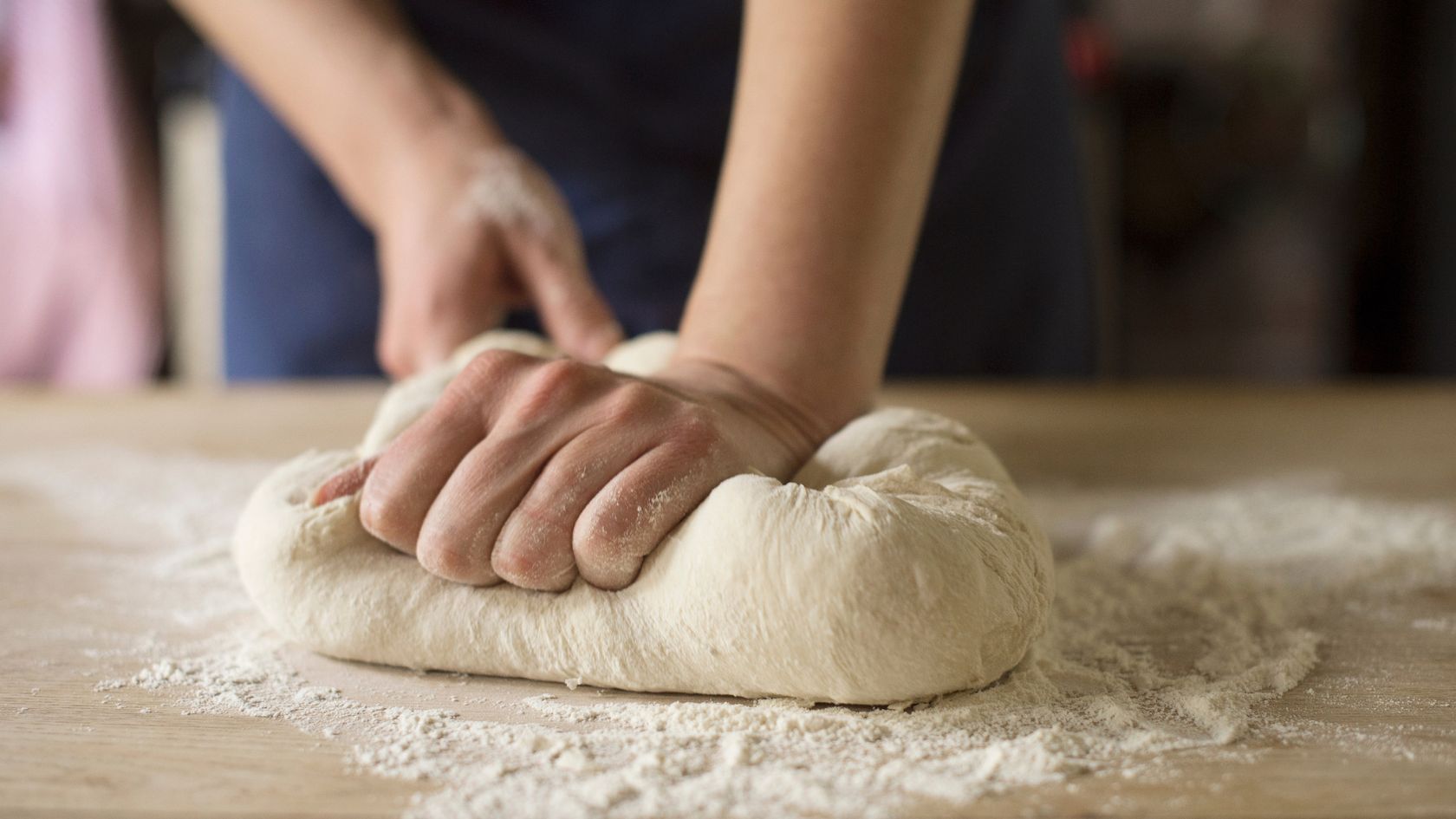
5. Mixing and kneading the dough
Industrial mixers, at different speeds, combine raw materials in such a way that:
- The flour components must be completely homogeneous.
- Evenly distribute moisture throughout the dough
- The gluten structure is fully formed.
In modern mixers, the speed can be set between 80 and 250 rpm or even higher depending on the type of bread. The mixing stage is finished when the dough reaches the desired consistency, has a smooth and homogeneous surface, and separates from the mixer walls.
6. Plucking the dough; the secret to light bread
Puffing or aerating dough is essential for producing light and digestible bread. There are three main methods:
- Biological: Carbon dioxide gas is produced using yeast or sourdough.
- Physical: Through mechanical injection of air or steam.
- Chemical: Adding permitted blowing agents.
7. Hygiene and maintenance tips
- Flour should be stored in silos or bags that are moisture and pest resistant.
- Equipment should be washed and disinfected regularly.
- Precise control of temperature and humidity in the production environment has a direct impact on the final quality.
8. Benefits of producing industrial bread with sustainable dough
- Uniform quality: Each loaf of bread has the same texture and taste.
- More nutritional value: Preserving flour nutrients
- Less waste: Reducing wheat waste
- Higher durability: Possibility of distribution over long distances
- Energy saving: Optimal use of devices and cost reduction